
Article Categories:
Dr David Kelly
- Details
I write these two pages in case my points might help towards a judicial review of Mr Grieve's negative response to our plea for an inquest. These points do, I think, concern the process in his response rather than his rationale.
The death of Dr Kelly, either by his own hand or by another's, was all about the Iraq war. That cannot be disputed. I note:-
- Details
 Fitness to Practise Panel
Session beginning 5 September 2005 to 9 September 2005
Reconvened on 18 November 2005, 27 March 2006, 15-16 and 18 – 19 January 2007, 19 February 2007
St James’s Building, 79 Oxford Street, Manchester, M1 6FQ
Dr Kenneth SHORROCK
Registration number: 2428013
This case has been considered by a Fitness to Practise Panel applying the General Medical Council’s Preliminary Proceedings Committee and Professional Conduct Committee (Procedure Rules) 1988.
Mr Taylor:
At all relevant times Dr Shorrock was a registered medical practitioner employed as a Consultant Pathologist at the Royal Halifax Hospital.
On 31 January 2000, on the instruction of Her Majesty’s Coroner, Dr Shorrock undertook a post-mortem examination of Gladys Allen at Dewsbury and District Hospital. Mrs Allen had died on 28 January 2000 shortly after undergoing the operation of left nephrectomy (removal of the left kidney), which had been performed by Mr Syed, locum consultant urologist. The indication for the operation was cancer of the kidney.
- Details
The forensic pathology: The subversion of due process continues. Part three
Andrew Watt ended his article with the post-mortem examination being carried out by Dr Nicholas Hunt on the evening the body was found 18 July 2003. It was the penetrating smell of Lysol, lights and stainless steel in the mortuary of the John Radcliffe Infirmary Oxford, as well as the remains of a fit husband and father. Nine police officers were in attendance, the most senior being Detective Chief Inspector Alan Young who was in charge of the investigation. He was at the scene on Harrowdown Hill where the unidentified body was found by Louise Holmes. In spite of his lead position in the inquiry into a missing person, and then a suspicious death, he was neither called to the Hutton Inquiry which started sitting 13 days later, nor did he submit a statement to it (1). There is no obvious explanation for the presence of nine police officers at this very morbid autopsy given that the police had sprayed the word 'suicide' about earlier that day. The size of the squad would surely have fitted better if murder was foremost in the minds of the investigating authorities.
- Details
Ms Ceri Fiona Floyd
Investigation Officer
General Medical Council
3 Hardman Street,
Manchester
M3 3AW
Your ref: E1-6PFP1I
My ref: Dr Nicholas Charles Alexander Hunt GMC 4025151 : The unnatural death of Dr David Kelly 17/18 July 2003
Dear Ms Floyd,
Thank you for your letter of 8 July. This follows letters from myself to the GMC 16 May 2011, to Ms Patel of the GMC 14 June, Ms Durham of the GMC to myself 15 June and myself to Ms Durham 17 June.
I will deal with four of my main concerns in order, including the one I have raised already. I will append relevant references and documents separately.
Thank you for giving me the link to the 'fitness to practice' details. I see that a warning which was given to Dr Hunt five years ago expires today - 17 July 2011.
I have quoted by copying and pasting from the original documents.
- Details
Mr Kevin McGinty
20, Victoria Street
London
SW1H 0NF
From:- David Halpin FRCS, Kiln Shotts, Haytor, Newton Abbot, TQ13 9XR
Insufficiency of inquiry
Dear Kevin,
I present in the following pages further evidence of insufficiency of inquiry. I have sent two previous letters as you know that are dated 28 November 2010 and 6 December 2010. I have also emphasised the importance in the evidence of our 'Opinion as to the likelihood that the death of David Kelly CMG DSc was the direct result of haemorrhage due to transection of his left ulnar artery'.
- Details
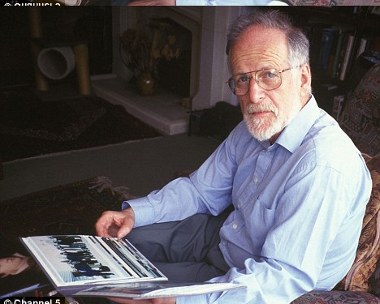 Married with 3 adult daughters. Bacteriologist by training. Acting head of Porton Down UK 10 years – UK's germ and chemical warfare defence research centre. Member of UNSCOM – visiting Iraq 36 times between 1991 and 1998 when the team was evacuated before the bombing in Operation Desert Fox. Top security clearance with US and UK SIS.
May 29 2003 BBC radio broadcast – Gilligan spoke of a source indicating that the 'dossier' used by Blair as a pretext for bombardment and invasion of Iraq had been enhanced.
Many citizens already knew that. The 'government' made sure that Kelly's name was identified – against all protocol for an employee of the security services (FCO and MoD). There were probably two other sources. There remains doubt as to whether Kelly was a source but there was great anger in Whitehall.
- Details
- Details
Dear Citizen,
You will know something about this man, his death and the lack of an inquest into it. A few of us doctors first voiced our concerns in January 2004. We did not believe the first cause of death - haemorrhage from a transected ulnar artery was feasible, or that suicide had been proved beyond reasonable doubt, or the intent to commit it. We saw that due process of law had been subverted. Instead of an inquest first and an inquiry into the political and media storm surrounding the death second, my Lord Falconer appointed my Lord Hutton on the same day Dr Kelly was found. That is while his body was still cooling. You will not be able to recall such alacrity in setting up any inquiry in the UK. Chilcot - announced 6 years + after the onset of Shock and Awe.
The 'inquest' that was subsumed into the Hutton Inquiry consumed only one half of one day, whereas the whole took twenty days. I could spend another 100 pages relating the omissions, the lies, the gross insufficiency in inquiry and more.
To cut a long story short, we engaged Leigh Day solicitors three years ago, with Frances Swaine in the lead and all working pro bono. Our colleague, Dr Michael Powers, was our barrister and also served pro bono. He has served as an assistant coroner and coronial law is one of his specialisms.
- Details
Witness Statement of Dr David Sydney Halpin FRCS
Application For Permission to Bring Judicial Review Proceedings
- Details
(2) D S Halpin
(3) First
(4) 8 September 2011
(5) Exhibit DSH1
IN THE HIGH COURT OF JUSTICE
QUEEN'S BENCH DIVISION
ADMINISTRATIVE COURT
IN THE MATTER OF AN APPLICATION FOR PERMISSION FOR JUDICIAL REVIEW
BETWEEN:
(on the application of)
DR DAVID SYDNEY HALPIN FRCS
THE ATTORNEY GENERAL
DR DAVID SYDNEY HALPIN FRCS
I, Dr David Sydney Halpin FRCS, of Kiln Shotts, Haytor, Newton Abbot, TQ13 9XR will say as follows:
Inroduction
2. I am a retired medical doctor and am one of the group of doctors who have made submissions to the Attorney General in this matter before (such other doctors being Dr Stephen Frost, Dr Christopher Burns-Cox, Dr Martin Birnstingl and Dr Andrew Rouse). Although the doctors have acted as a group previously, with Dr Frost as our lead memorialist, I am now the sole Claimant in these proceedings.
3. I have read the Statement of Facts and Grounds relied upon and I am able to confirm that the facts set out in the document are accurate and in accordance with my knowledge.
4. I make this witness statement from my own knowledge, save where otherwise stated, and, where so stated, I believe those matters to be true. There is now produced and shown to me a paginated bundle of true copy documents marked DSH1, to which I shall refer in this statement.
Professional background
6. My 'academic' abilities were recognised by my being asked to serve on the Journal of Bone and Joint Surgery for 4 years. I was closely and enjoyably involved in teaching and in encouraging young surgeons.
The death of Dr David Kelly and my interest
As a past trauma and orthopaedic surgeon I cannot easily accept that even the deepest cut into one wrist would cause such exsanguination that death resulted. The two arteries are of matchstick size and would have quickly shut down and clotted. Furthermore we have a man who was expert in lethal substances and who apparently chose a most uncertain method of suicide.
The picture fits more with 'a cry for help'.
I have hesitated in writing this because I would not wish to hurt any family feelings.
David Halpin FRCS
8.2 The inquest had indeed been subsumed in the Hutton Inquiry.
8.3 The core/rectal temperature had not been taken by Dr Nicholas Hunt until 7 hours after he had arrived at the scene.
10. As medical professionals we were all keenly aware of the common law duty to report any information likely to lead to an inquest. Dame Janet Smith confirmed at paragraph 19.128 of the third report of the Shipman Inquiry that 'all citizens are under a common law duty to report to the police or coroner any information likely to lead to an inquest'. She also said in that same report 'in my view, there should be a statutory duty on any qualified or responsible person to report to the Coroner Service any concern relating to the cause or circumstances of death of which he becomes aware in the course of his duties. In the class of 'qualified' persons, I include doctors, nurses, midwives and paramedics' (DSH1/16). We were all keenly aware of this and considered it our legal and ethical duty to pursue the questions and concerns we had about the findings at the Hutton Inquiry.
11. We gathered as many of the facts together as we could and in 2004 we wrote to Mr Nicholas Gardiner, Oxfordshire Coroner, requesting him to re-open the inquest. Copies of our letters appear at DSH1/63-70. The Thames Valley Police had concluded that Dr Kellys death did not warrant a full murder investigation. Consequently we took the view that further reporting to the Police and the Coroner would be fruitless and so have made our representations to the Attorney General directly. These were summarised in the Memorial of Dr Stephen Frost and its Addendum (DSH1/17-309).
12. Our group continued to press for an inquest and in the years since we have spent thousands of hours in study, analysis and in pleading. Our hard work was acknowledged by the Attorney General in his letter of 16 March 2010, when he stated I am aware of the work of the doctors group on challenging Lord Huttons findings. It seems to me that they have been able to make an impressive and cogent case. (DHS1/310).
13. I persisted in this and I am making this application for judicial review now for the following reasons.
14. First, my medical knowledge did not allow me to accept that the first cause of death was haemorrhage from transection of the ulnar artery. Furthermore, I believe that there is good evidence that puts into question the second cause of death overdosage with coproxamol tablets.
15. Secondly, I could not see the rationale for the hasty institution of an ad hoc inquiry by Lord Falconer on 18 July 2003 whilst Dr Kelly's corpse was still cooling. The proper and lawful response should surely have been an inquest first, with the inquiry as to political/media influences later on.
16. Thirdly, I was brought up in a family where to lie is a cardinal sin. I cannot accept that the many wilful omissions and the few actual lies in the Hutton Inquiry should be left uninvestigated.
17. Fourthly, I am aware that the shock which many fellow citizens felt on news of Dr Kellys death has persisted. Many feel that this sad and very morbid death of a highly esteemed public servant requires and merits proper examination.
18.2 The role of the Attorney General.
18.3 The insufficiencies of the Hutton Inquiry.
18.4 New evidence.
Standing and public interest
20. First, I am a highly experienced medical practitioner. Secondly, I have been interested in this matter for many years and, with the assistance of other medical colleagues, have carried out a great deal of research. Thirdly, although I am now the sole Claimant, I still have the support of my medical colleagues and also a great deal of support from the public.
21. I believe that this claim raises issues of great public importance and I believe that it is right that someone should be able to call the Attorney General and other influential politicians to account. I respectfully submit that I am a suitable person to do so, due to my experience and medical knowledge.
22. While I do not wish to cause undue distress to Dr Kelly's family, the timing of his death and the circumstances shortly prior to his death were, understandably, subject to a great deal of press interest, and are still clearly keenly felt today. I believe that these have not been adequately addressed. I was, therefore, gratified to see that the Attorney General, in his letter of 16 March 2010, shared my concern: I am conscious this is a matter where the public have not been reassured that the Hutton Inquiry satisfactorily resolved the matter. (DSH1/310).
23. The various questions which have been raised over the Hutton Inquiry, and the outstanding queries and suspicions, are a blight on this countrys proud tradition of the rule of law. I believe that these are serious matters which the public deserve to have dealt with in the open, transparent and procedurally robust forum of a properly convened inquest.
24. Furthermore, the grounds for judicial review raise serious questions about the role of the Lord Chancellor and separation of powers, which I believe have wide ranging constitutional implications beyond the question of Dr Kelly's death. This has been partially recognised in the Governments subsequent reform of the role and the current Ministry of Justice.
25. For all these reasons I believe that this matter is in the highest public interest and that I have standing to bring these issues before this Honourable Court.
The current medical issues
27. The Hutton Inquiry did not, in my view, properly fulfil the role of an inquest. The place of death is not stated, as one would expect in an inquest, the time of death is very broad, and the evidence for it is, I believe, unreliable due to Dr Hunts delay in taking the rectal temperature.
28. More significantly, I believe that the investigation into the levels of paracetamol and dextropropoxyphene was inadequate. To summarise, the concentrations detected in one blood sample (NCH/47) referred to in Dr Allans Report indicate a level above the therapeutic but below the toxic range. However Dr Allan reported no drug content in a second sample (NCH/44) and, while another two blood samples were mentioned, no drug concentrations were described (DSH1/311-317). The site of origin of the five blood samples taken by Dr Hunt are unknown, except for one which came from the heart. These are serious issues yet Dr Allan was not pressed on these issues at the Hutton Inquiry. I believe that an inquest could, and would, have looked into these issues more fully than the Hutton Inquiry. These issues have been considered before and in September 2004 I and four other doctors wrote to the Guardian (see DSH1/150) following its coverage of an editorial in the British Medical Journal which observed that the level of paracetamol and dextropropoxyphene in Dr Kellys blood should not have been taken as an accurate indicator of the amount allegedly ingested (DSH1/318).
29. I have further reason to believe that Dr Hunts evidence should have been more thoroughly tested. I attach a copy of the transcript of the evidence he gave to the Hutton Inquiry at DSH1/54-62. Dr Hunt gave evidence in relation to the alleged narrowing of Dr Kellys coronary arteries and observed that the condition may have played some small part in the rapidity of death but (was) not the major part in the cause of death. However on 27 August 2010 Dr Hunt was quoted in The Sunday Times, and presumably with the permission of the Oxford Coroner, as saying: If he [Dr Kelly] had dropped dead in the canteen at Porton Down and you had seen his coronary arteries, you would have had a very good reason to believe that was the only reason he died (DSH1/91). This is a significant discrepancy and indicative of the fresh evidence that should be properly examined and, I believe, could result in a different outcome if an inquest were to be held now.
30. I also have my own concerns about the cause of death. I have referred above to the conclusion, shared by the group of doctors, that the bleeding from Dr Kelly's ulnar artery was highly unlikely to have been so voluminous and rapid that it was the primary cause of death. I attach at DSH1/1 a copy of a medical report prepared by the group of doctors giving our opinion that, broadly, it was highly improbable that Dr Kelly could have died as a result of the pathological factors given by Dr Hunt as the cause of death. I confirm that, in my professional opinion, the contents of that report remain valid.
31. I believe that this information, together with the fresh evidence outlined in the grounds, should have been considered by the Attorney General in coming to his decision. Unfortunately, while I am aware that he undertook various personal investigations (and I believe that he exceeded his powers in doing so) I am unaware what information he considered. This is because his investigations took place partly behind closed doors in conjunction with others (not all of whose identities are known) whose opinions have never been tested in open court or in any other official context. I believe that I am entitled to have access to all this information, as it may include matters which, if properly examined at an inquest, may well lead to a different outcome.
Public fundraising
33. To date £35,000 has been raised, from over 600 individual donations. Comments have included:
33.2 I do hope the Inquest Fund reaches its total. I passionately believe in justice being seen to be done. (PW, Brighton)
33.3 Both my husband and myself sincerely hope that you receive enough funds to proceed. Dr David Kelly was a man with great integrity and deserves justice. (SH, Horsham)
33.4 I am so sorry that I cannot afford a larger donation but I am a disabled pensioner on a very low income. I very much hope that you will reach the necessary fund target for a review procedure. Dr Kelly deserves an honest decent hearing of his case and for the 'smokescreen merchants' to be exposed. (KS, London)
33.5 I am a pensioner with very limited funds As an ex-Soldier thought that I had fought for democracy and pride in British standards. I feel let down I wish the campaign well, and hope that you can give us back some pride and expose this cover-up.
My application for a protective costs order
35. However, there is no provision to cover any adverse costs award, should the Attorney General decide to contest my application and succeed in this. My family is understandably very concerned about the potential effect of an adverse costs order and I doubt I would be able to continue this matter, despite my very strong convictions, if my potential exposure to adverse costs is too great.
36. Consequently I have applied for a protective costs order. I believe that this is justified for the following reasons.
36.2 I have no private interest in the outcome of the case.
36.3 It would also be fair and just to make such an order in the light of my limited financial assets. I am retired and of relatively modest means I receive an NHS pension appropriate to my grade and share a bungalow with my wife.
36.4 In the light of the risk to my familys livelihood, although I strongly believe in the importance of this case, it is very unlikely that I would be able to continue with these proceedings if a protective costs order is not made.
Conclusion
37. I humbly submit that there has been an insufficiency of inquiry into the death of Dr David Kelly and that the Attorney Generals decision not to apply to the High Court to seek a new inquest was highly irrational.
Dr David Halpin FRCS
Dated:
(2) D S Halpin
(3) First
(4) 8 September 2011
(5) Exhibit DSH1
QUEEN'S BENCH DIVISION
ADMINISTRATIVE COURT
IN THE MATTER OF AN APPLICATION FOR PERMISSION FOR JUDICIAL REVIEW
BETWEEN:
(on the application of)
(1) DR DAVID SYDNEY HALPIN FRCS
(1) THE ATTORNEY GENERAL
WITNESS STATEMENT OF
DR DAVID SYDNEY HALPIN FRCS
16 Old Bailey
London
EC4M 7EG
Tel: +44 (0)20 7597 6000
Fax: +44 (0)20 7597 6543
Ref: jvm/jyg

